
Struggling with high energy costs and uncomfortable air in your commercial space? HVAC systems alone can be a huge drain. Energy-efficient ceiling fans provide a smart, stylish solution to improve comfort.
Energy-efficient ceiling fans transform commercial spaces by drastically lowering HVAC costs, improving air circulation for better comfort, and enhancing the interior design. They use advanced DC motors[^4] and aerodynamic blades to move more air with less power, offering a significant return on investment.

I’ve seen it firsthand in projects we’ve worked on over the last 20 years. A well-chosen fan does more than just move air; it completely changes the feel and function of a room. But not all fans are created equal. You need to know what to look for to get these benefits. Let’s break down what really makes a fan energy-efficient and how you can use that to your advantage in your next project.
What Really Makes a Ceiling Fan Energy-Efficient?
Confused by all the “energy-efficient” labels on ceiling fans? It’s easy to get lost in marketing terms and not know what truly saves energy. Let’s look at the core technology.
A ceiling fan is energy-efficient primarily due to its motor and blade design. Modern DC (Direct Current) motors use up to 70% less energy than traditional AC motors. Combined with aerodynamic blades, they achieve a high CFM (Cubic Feet per Minute) per Watt rating.
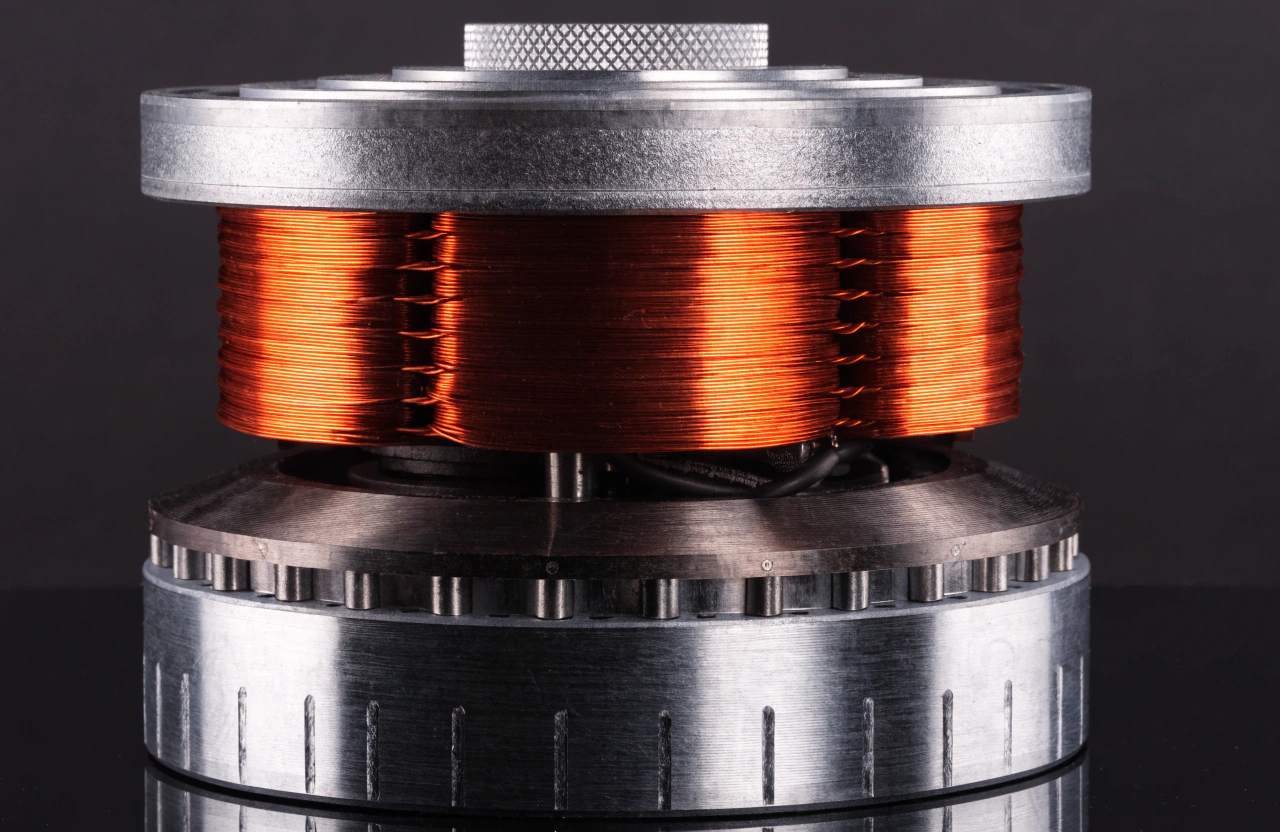
The term “energy-efficient” gets used a lot, but for us in the factory, it comes down to measurable performance. Two key components determine a fan’s efficiency: the motor and the blades.
The Motor: DC vs. AC
The biggest leap in fan technology has been the shift from AC (Alternating Current) to DC (Direct Current) motors. For years, all our export models used AC motors because they were reliable and cheap. But for our clients in Europe and the US, energy costs became a huge issue. DC motors were the answer. They use magnets and electronics to turn the fan, which is far more efficient. They are also nearly silent and allow for more speed settings, often up to six, compared to the typical three on an AC fan.
The Blades: Aerodynamics Matter
A powerful motor is useless if the blades aren’t designed to move air well. The shape, pitch (angle), and material of the blades all play a role. We design blades with an aerodynamic profile, similar to an airplane wing, to move the maximum amount of air with minimal drag. This means the motor doesn’t have to work as hard, which saves even more energy.
The Key Metric: CFM per Watt
This is the number that tells the real story. It measures how much airflow (CFM) you get for each watt of energy used. A higher number means a more efficient fan.
| Feature | Standard AC Fan | High-Efficiency DC Fan |
|---|---|---|
| Energy Use | 70-100 Watts | 15-30 Watts |
| CFM/Watt | 75-100 | 200-500+ |
| Speed Control | 3-speed | 6-speed, Reversible |
| Noise Level | Audible hum | Virtually silent |
When a client asks me for proof, I just show them this table. The numbers speak for themselves.
How Do You Choose the Right Size and Style for Your Project?
Worried about choosing the wrong ceiling fan for a large space? A mistake can look bad and perform poorly. Let’s simplify the selection process so you get it right every time.
Choose the right size based on the room’s square footage; larger rooms need larger blade spans for effective air circulation. For style, the fan should complement the existing decor, acting as either a statement piece or a subtle addition. Consider materials, finishes, and overall design aesthetic.
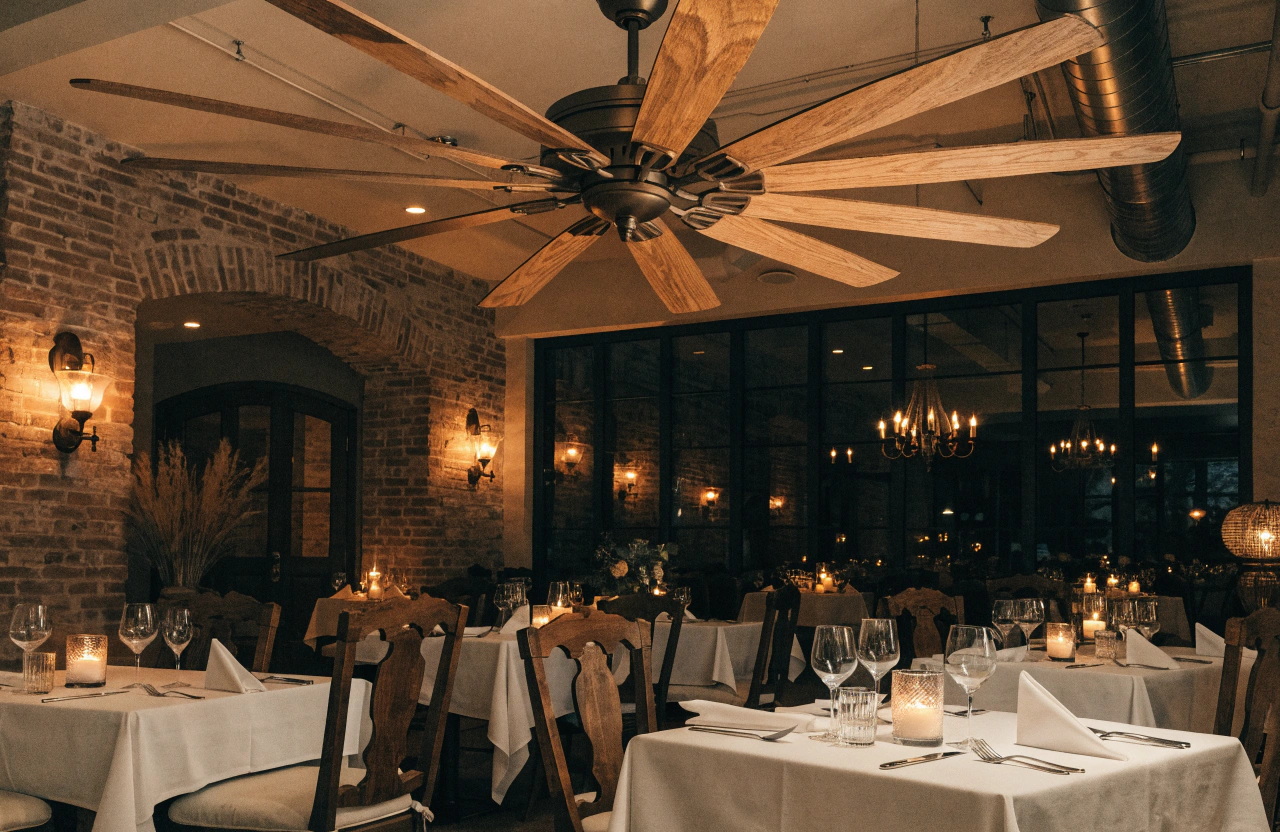
Getting the right fan is a balance between performance and aesthetics[^8]. I always tell my clients, a fan is like a piece of furniture for your ceiling. It has to work well and look good.
Sizing Your Fan Correctly
Size is not just about looks; it’s about function. A fan that’s too small for a room won’t move enough air to make a difference. A fan that’s too large can create an uncomfortable, windy feeling. The key is matching the blade span (the diameter of the fan) to the room’s size. For commercial spaces with high ceilings, you may also need a longer downrod to bring the fan to an optimal height, usually 8-9 feet from the floor.
Here is a simple guide we use for our projects:
| Room Size (sq. ft.) | Recommended Blade Span (inches) |
|---|---|
| Up to 144 (12’x12′) | 42″ – 48″ |
| 144 to 225 (15’x15′) | 52″ – 56″ |
| 225 to 400 (20’x20′) | 60″ – 72″ |
| Over 400 (Large Lobbies) | 72″ – 96″ or multiple fans |
Matching Style to Space
Once you know the right size, you can focus on style. The fan should feel like part of the room’s design. For a minimalist office, a sleek, three-blade fan in a matte white or black finish works well. For a rustic hotel lobby, a fan with wooden blades and a bronze or iron finish might be perfect. The goal is to match the existing hardware, lighting, and furniture.
Customization for Commercial Projects
This is where we excel. A designer for a hotel chain in the US once came to us with a specific RAL color they needed for the fan housing to match their brand identity. Standard suppliers couldn’t do it. We were able to create a custom powder-coat finish for their 200-fan order. For commercial projects, this ability to customize finishes, blade shapes, and even lighting kits is crucial. It ensures the final product is truly integrated into the design, not just an afterthought.
Can Smart Ceiling Fans Really Improve Guest and Employee Comfort?
Tired of constantly adjusting fans to keep everyone comfortable? Manual controls are a hassle in a busy commercial setting. Smart fans offer a simple, automated solution for perfect comfort.
Yes, smart ceiling fans significantly improve comfort by using features like remote controls, scheduling, and thermostat integration. They automatically adjust speed to maintain a consistent temperature, enhancing the experience for guests in hotels or employees in offices without any manual intervention.
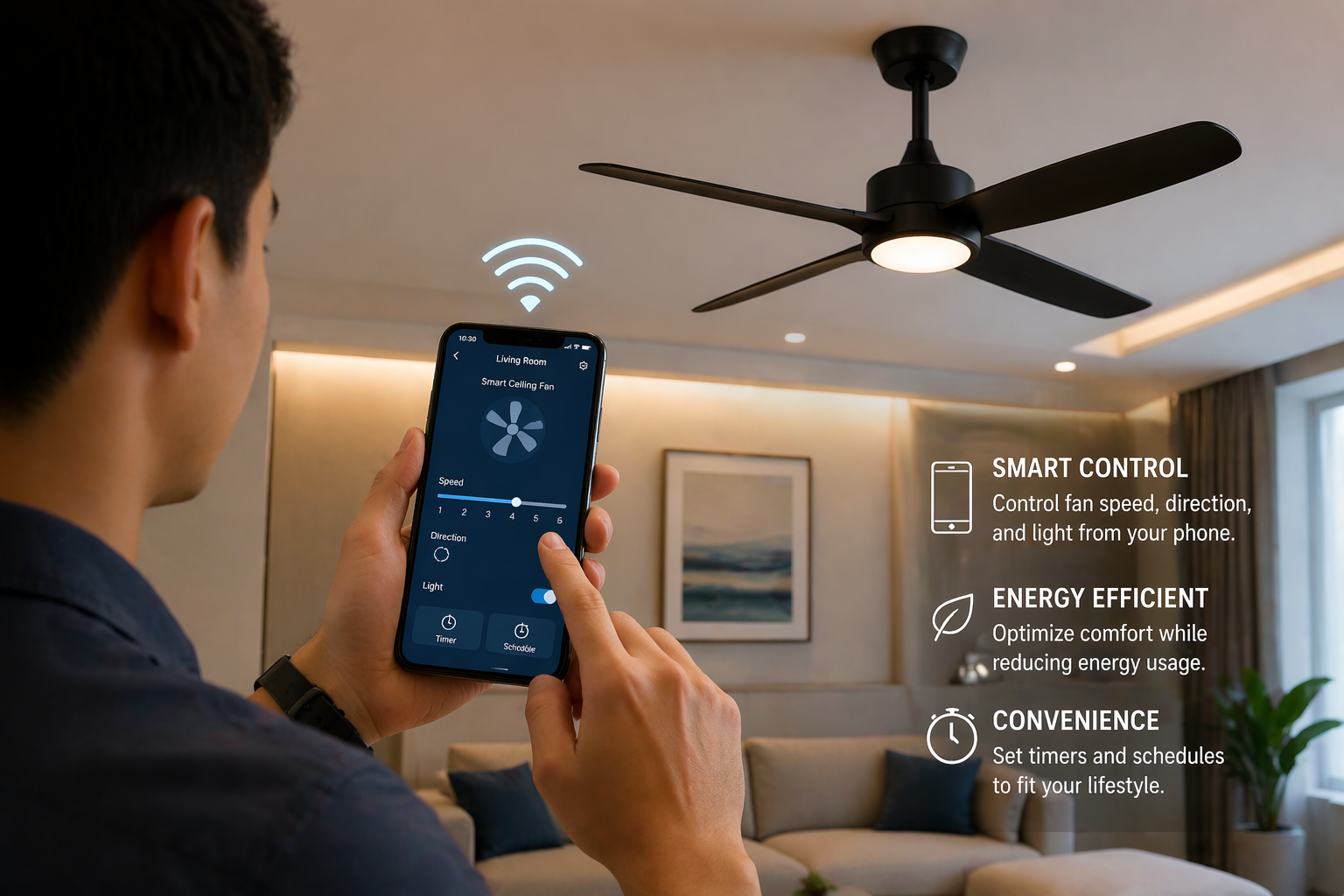
Technology has changed our industry completely. A fan is no longer just a motor with blades. It’s a smart device that can think for itself. This has been a game-changer for our clients in the hospitality and corporate sectors.
Key Smart Features
Smart fans connect to Wi-Fi, which unlocks a new level of control. Instead of a pull chain or a wall switch, you can use a remote, a smartphone app, or even your voice with systems like Amazon Alexa or Google Assistant. You can set schedules, so fans in an office turn on 30 minutes before employees arrive. Many smart fans also have temperature and humidity sensors[^10]. They can automatically adjust their speed to maintain the perfect room condition, which is a luxury feature for a hotel guest.
The Impact on User Experience
Imagine a guest checking into a hotel room. They can adjust the fan speed and light from their bed using a simple remote or app. They don’t have to get up to fiddle with a confusing wall control. In an office, smart fans can work together to create consistent airflow across a large open-plan space, eliminating hot and cold spots. This small detail greatly improves the daily experience. One of my clients, who manages a large co-working space, told me that complaints about the office being “too stuffy” or “too cold” dropped by over 50% after we installed smart fans.
Integration with Building Systems
For large-scale commercial projects, the real power comes from integration. Many modern smart fans can be connected to a central Building Management System (BMS)[^11]. This allows a facilities manager to monitor and control every fan in the building from a single computer. They can set energy-saving schedules for the entire building, diagnose maintenance[^12] issues remotely, and ensure every space is optimized for both comfort and efficiency. This level of control was impossible just a decade ago.
What Are the Long-Term Cost Savings and ROI?
Concerned about the initial investment for high-quality ceiling fans? It’s a valid point for any large-scale project. But the real story is in the long-term savings and fast payback.
The long-term cost savings are substantial. By reducing the load on HVAC systems, energy-efficient fans can cut heating and cooling costs by up to 30%. This often leads to a return on investment (ROI) in just one to three years, depending on usage and climate.
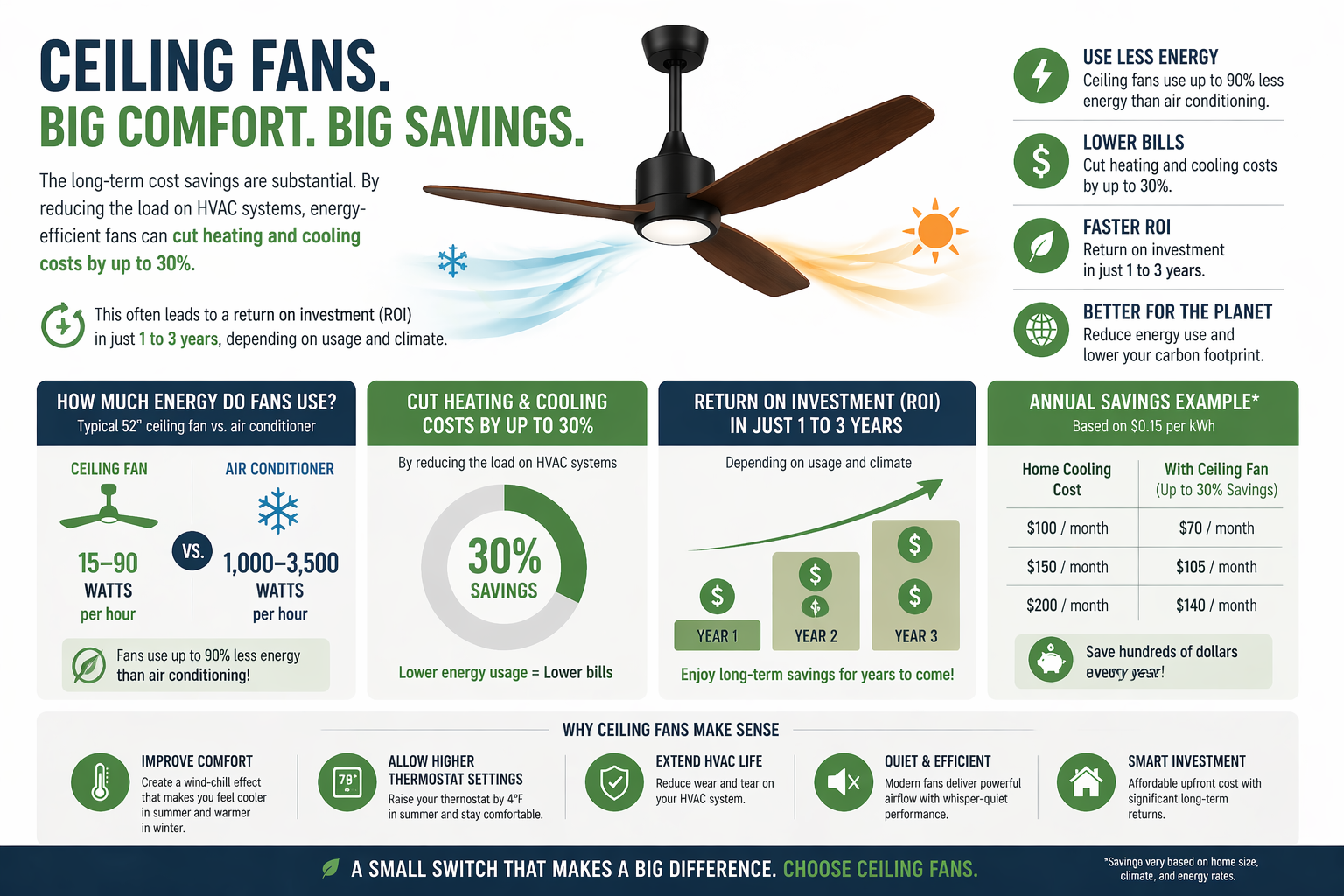
Every project manager and procurement officer I work with asks the same question: “What’s the return on investment?” It’s a fair question. High-quality DC fans cost more upfront than basic AC models. But the payback is faster than most people think.
How Fans Reduce HVAC Load
Fans don’t actually cool the air. They create a wind-chill effect that makes you feel cooler. In the summer, this means you can set your air conditioning thermostat several degrees higher and feel just as comfortable. Every degree you raise the thermostat can save you 3-5% on your cooling costs. In the winter, you can reverse the fan’s direction. This pushes the warm air that naturally rises and gets trapped at the ceiling back down into the room. This de-stratification helps your heating system work more efficiently, again saving energy.
Calculating Your ROI
Let’s look at a simple example for a small office with 10 fans.
| Cost/Saving Item | Calculation | Amount |
|---|---|---|
| Upfront Cost | 10 DC Fans @ $400/each | $4,000 |
| Annual Energy Use (AC Fan) | 10 fans x 75W x 8hr/day x 250 days | 1,500 kWh |
| Annual Energy Use (DC Fan) | 10 fans x 25W x 8hr/day x 250 days | 500 kWh |
| Annual Savings (Fans Only) | 1,000 kWh x $0.15/kWh | $150 |
| Annual HVAC Savings | Est. 15% of $5,000 bill | $750 |
| Total Annual Savings | $150 + $750 | $900 |
| Return on Investment | $4,000 / $900 per year | ~4.4 years |
This is a conservative estimate. In hotter climates, the ROI can be as fast as two years. I had a restaurant client in a very hot climate who said our fans paid for themselves in the first summer alone.
Beyond Energy Bills: Other Savings
The savings don’t stop at the electricity bill. Because your HVAC system isn’t working as hard, it requires less maintenance and will have a longer lifespan. Also, DC motorshave fewer moving parts and are more durable than AC motors, meaning the fans themselves will last longer with fewer issues. When you look at the total cost of ownership, energy-efficient fans are one of the smartest investments you can make for a commercial property.
Conclusion
Energy-efficient ceiling fans[^1] are a smart investment. They lower costs, improve comfort, and elevate your design. Choosing the right partner ensures you get a custom solution that delivers results.